A Dumpster-Bound R710 That Ran for Another 8 Years
In 2017, I was doing a job at a motorcycle dealership during maintenance hours. One of those loud, overpriced, American-branded, made-in-Mexico free-rider-problem motorcycle dealers with a sticker cost that would make you believe it was an ass-wiping robot. A motorcycle dealer doesn’t need much from a systems perspective, but they need the typical things. Networking, storage, servers. We were pulling out a bunch of old servers and switch equipment as part of a refresh on sales-and-vendor-recommended support schedules, and my peer Joe told me to throw them away. I asked if I could have one instead. He said yes.


That’s how I ended up with a Dell PowerEdge R710. I carried it out to my truck myself. It had been running in their environment for probably 5 or 6 years before someone decided it was time to refresh, and it was headed for the recycler along with everything else from the decommission.
That server ran in my lab for nearly 8 years in various forms. At first it was some bastardized VMware 4.x version that required a disgusting fat client to provision virtual machines. Then it was reimaged with Ubuntu 20 bare metal. At one point I hacked a GPU into it with some homemade wiring, soldering, and riser card hacking.
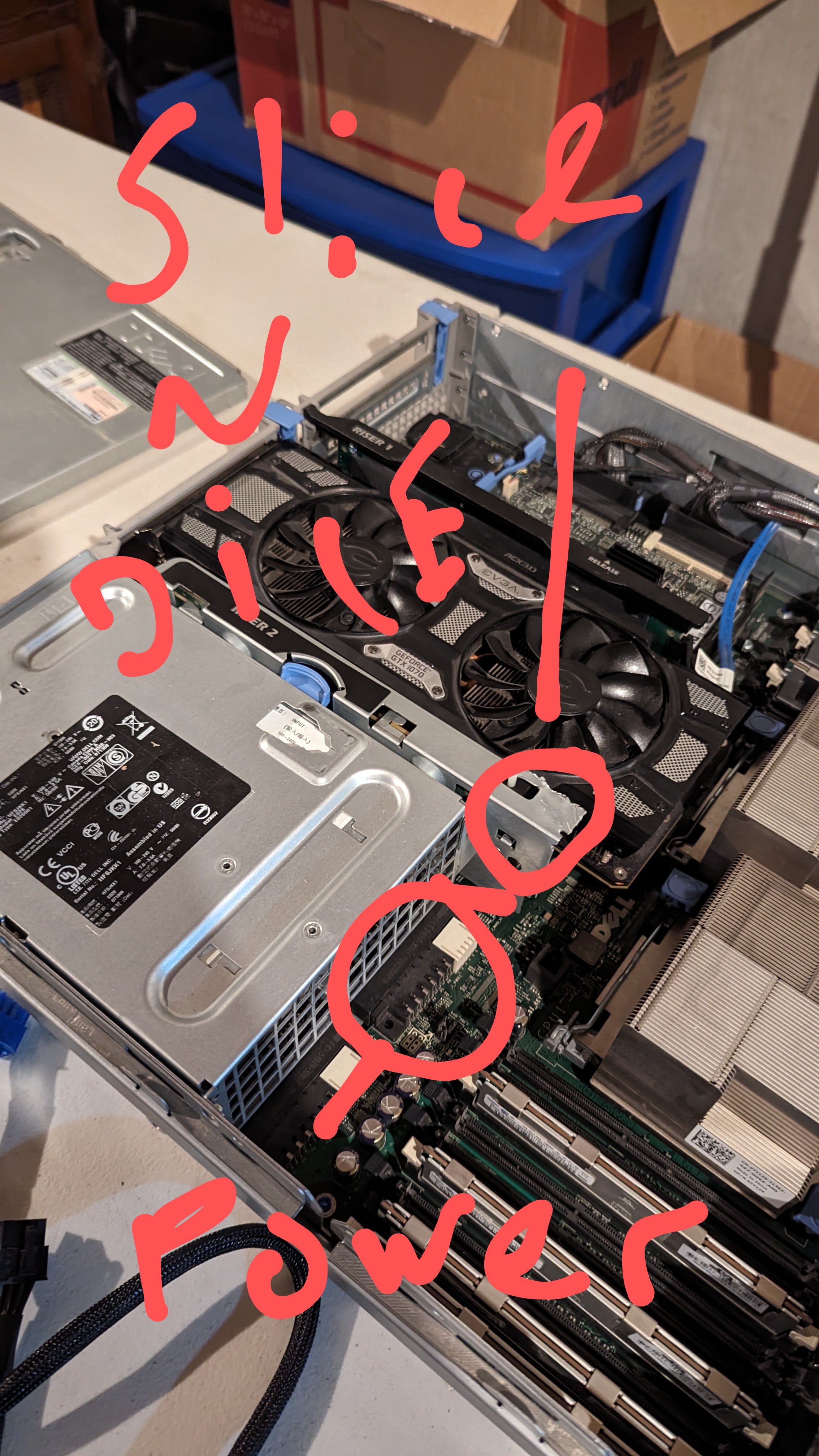
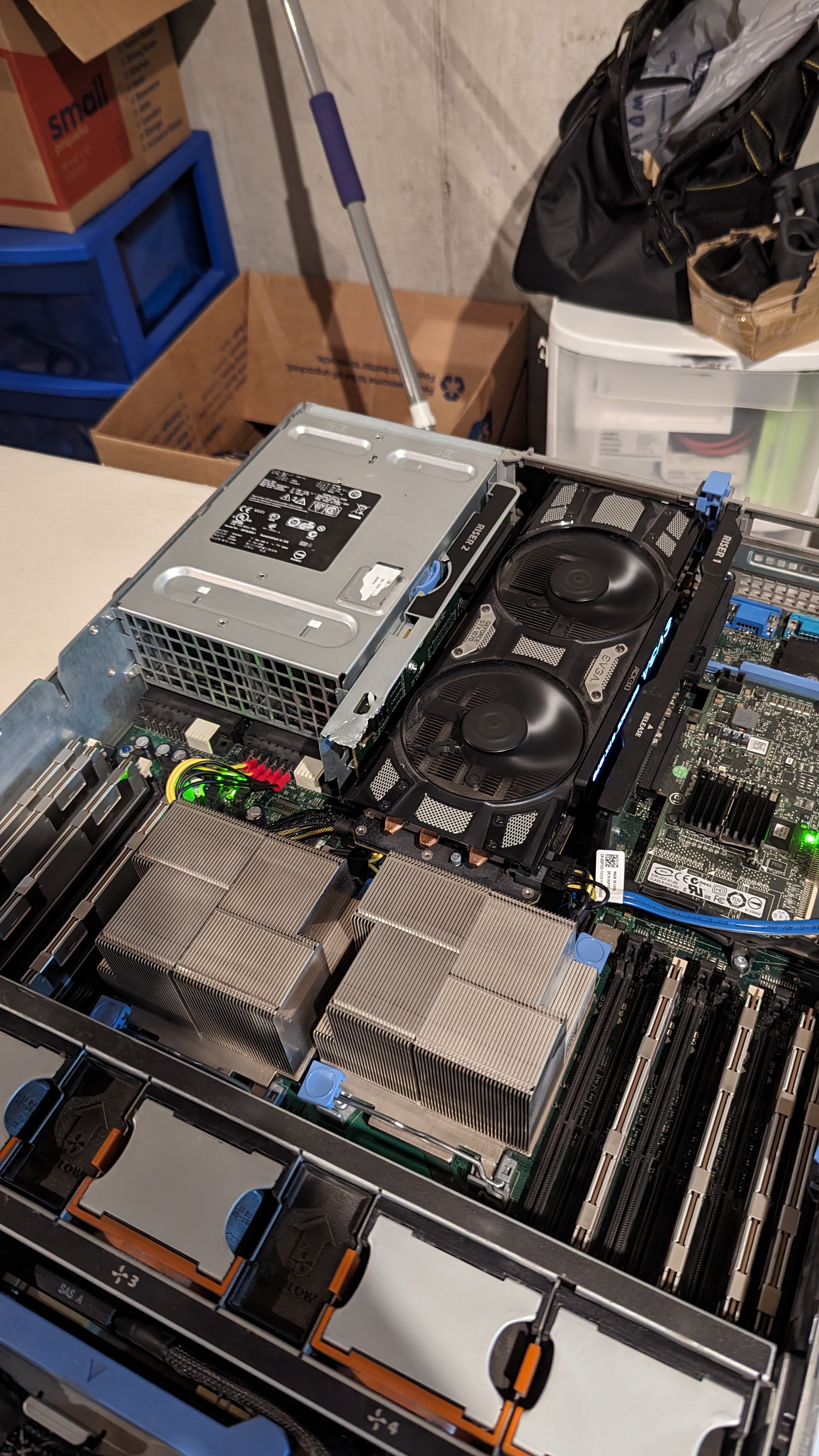
Over the years it was a log aggregator, a multi-use Docker server, a Plex transcoding box (too weak to transcode a single stream reliably without a GPU), and finally a Minecraft Bedrock server before getting turned off in March 2026. Not because it failed, but because I didn’t want to run a big 4RU server anymore when newer, more efficient hardware could do the same work. The hardware that replaced it for the DMZ workloads is a set of Proxmox VMs running on a Dell R610 that pulls a fraction of the power.
Despite not knowing the exact power consumption, I can only speculate that the workloads it was running by the end were not deserving of the electricity bill keeping it alive.
As part of the lab modernization project, it was only natural to replace this DMZ server with the R610 I bought back in the days of being a fledgling network engineer, when I was using it as a lab for GNS3 and Active Directory servers (gross). That R610 came out somewhere around 2009 or 2010 and lasted, with power running, with no failures including the drives, for 16 years. And it still works. It now runs Proxmox and has become the general-purpose VM host for anything that doesn’t belong in the Kubernetes cluster. The DMZ Minecraft servers live there, provisioned through Terraform and deployed by Ansible via GitHub Actions. The LGTM monitoring stack runs there too, Grafana, Prometheus, Loki, the whole observability layer on its own dedicated VM. 128 GB of RAM means I can scale a ton of low-frequency VMs on it without thinking twice.
Not everything should live in Kubernetes. The k8s cluster handles the media stack and the services that benefit from pod scheduling and rolling deploys. But monitoring infrastructure that watches the cluster shouldn’t run inside the cluster it’s watching. Game servers that need dedicated resources and direct network access don’t benefit from container orchestration. A Proxmox hypervisor with traditional VMs is still the right tool for workloads that need isolation, stability, and simplicity over orchestration. Not every egg belongs in the same basket, and the R610 is the basket for everything else. More on the full hardware breakdown and what it all costs in The Budget Home Datacenter.
For now, the R710 still lives in death, because my home-built rack is a bit imperfect from a squaring perspective and pulling it out means a bunch of shaking, pulling, and banging underneath a server with a sensitive storage array sitting above it.
The Hardware Itself#
Dual Xeon X5650s, 6 cores each, clocked at 2.66 GHz. By 2017 standards these were already old chips. By 2025 standards they’re ancient. But enterprise hardware was built to run 24/7 for years in a datacenter. Redundant power supplies. Loud but effective fans. A PERC H700 RAID controller that never gave me a single problem. I wiped the drives that came with it, booted it up, and it ran.
For years it ran Docker Compose workloads. A couple of Minecraft servers for friends. Some personal services. Nothing fancy. The compute was slow but it didn’t matter for what I was doing. What mattered was that it had tons of storage, it never crashed, and it cost me exactly zero dollars.
The R710 eventually became my DMZ host, directly connected to the firewall on its own VLAN, serving game servers to the internet. It did that job until I migrated the DMZ workloads to Proxmox VMs as part of the lab modernization. The hardware was still running fine when I pulled the plug. I retired it because the architecture changed, not because it failed.
Enterprise Refresh Cycles#
Companies replace hardware on a schedule, not because it’s broken. Servers get refreshed every 5 to 7 years. Network gear is supposed to follow the same cycle but usually stretches to 7 to 10 because switches and routers just don’t die. The vendor sells a support contract, the contract expires, and the vendor’s sales team shows up with a quote for new hardware and a pitch about how the old stuff is “end of life” and “no longer supported.” The implication is that running unsupported hardware is risky, and for a business with SLAs and compliance requirements, that’s often true enough to justify the purchase.
But the bigger driver isn’t even the hardware vendors. It’s the hypervisor companies. VMware and Nutanix both maintain strict hardware compatibility lists that dictate which servers are “supported” for their software. If your server isn’t on the HCL, you don’t get support. If you don’t get support, you fail your compliance audit. So even if the hardware is perfectly functional, the hypervisor vendor’s compatibility matrix forces the refresh. The hardware company doesn’t get to decide how long their server is useful. The software vendor does, and they have every incentive to keep that window narrow. It’s the tail wagging the dog, and it’s the single biggest reason perfectly good servers end up in recycling bins. Nutanix is at least less painful to deal with than VMware from a support and complexity standpoint, but they both play the same HCL game.
In a homelab, none of that applies. I run Proxmox, which is open-source and doesn’t care what hardware it’s installed on. There’s no HCL to check, no licensing audit to pass, no vendor telling me my R610 is too old to virtualize on. The hardware either works or it doesn’t, and mine works. That’s the freedom you get when you step off the enterprise licensing treadmill.
There’s a whole grey market built around this, though it’s shrinking. Companies buy decommissioned enterprise gear, test it, and resell it at a fraction of the original price. When I worked in city government, I used to laugh at the agencies that bought grey market Cisco switches instead of going through the official channel. Why would you cheap out on infrastructure? Then I watched those same switches run for years without a single issue, because a Catalyst 2960 running IOS doesn’t care who bought it or whether Cisco’s TAC will pick up the phone. The commands are the same, the hardware is the same, and the failure rate is the same. The only difference is the sticker price and whether you get a warm feeling from a support contract you’ll probably never use.
That said, the grey market is going the way of the bygone era. Licensing has moved digital. More and more vendors tie functionality to cloud-managed subscriptions, phone-home activation, or hardware serial number validation against a license server. You can buy a grey market Meraki switch for pennies, but it’s a paperweight without an active license. The days of buying used gear, plugging it in, and having full functionality are numbered for a lot of product lines.
But for hardware that doesn’t have that problem, for dumb switches, for servers, for anything where the value is in the iron and not the license, grey market is still a legitimate option. Labs, temporary environments, disposable infrastructure, staging clusters, anything where the hardware is replaceable and the workload doesn’t justify new pricing. Not every environment needs a vendor relationship, and not every piece of hardware needs to be bought at list price.
But the hardware itself is fine. A server that ran reliably for 5 years in a datacenter doesn’t suddenly become unreliable on year 6. The components are enterprise-grade. The firmware is stable. The failure rate doesn’t spike the day the warranty expires. What changes is the vendor’s willingness to send you a replacement part within 4 hours.
For a homelab, that doesn’t matter. If a drive fails, I replace it myself. If a power supply dies, I order one on eBay for $30. The R710 had hot-swap everything. I could pull a drive, a PSU, or a fan without powering down. The support contract I needed was a screwdriver and a browser with eBay open.
Where Does It All Go?#
When enterprise equipment gets decommissioned, it goes to IT asset disposition (ITAD) companies. In theory, they securely wipe drives, strip any sensitive data, and either resell the equipment or recycle the materials. In practice, the industry is a mixed bag.
The good ITAD companies are certified (R2 or e-Stewards), they document the chain of custody, and they actually verify drive sanitization. The less good ones have been caught letting “recycled” equipment show up in overseas markets with data still on the drives. A 2019 study by Blancco and Ontrack found that 42% of 159 used drives purchased on eBay still contained recoverable data, with 15% containing personally identifiable information.
The environmental side is real too. The EPA estimates that only about 25% of e-waste in the US gets properly recycled. The rest goes to landfills or gets exported. A server chassis is mostly steel and aluminum, which recycles well. The circuit boards contain gold, copper, palladium, and other recoverable metals, but extracting them requires specialized processing. The economics only work at scale, which is why a lot of it ends up in countries with cheaper labor and looser environmental regulations.
The best outcome for a decommissioned server is that someone like me grabs it and runs it for another 8 years. Second best is proper ITAD with certified recycling. Worst case is a landfill in Tanzania.
The Current Hardware Stack#
| Hardware | Role | Specs | Cost | How Acquired |
|---|---|---|---|---|
| 5x Lenovo ThinkCentre M910q | Kubernetes cluster (nebula-1 through 5) | i5-7500T, 32GB RAM, 1TB NVMe each | ~$500 total + ~$450 upgrades | eBay/refurb (2024) |
| SuperMicro X9SRH-7F w/ GTX 1070 | Plex, Steam headless (big-boi) | Xeon E5-1660 v2 (6c/12t @ 3.7GHz), 64GB RAM, 1TB HDD + 116GB SSD | ~$200 (stripped board/cpu/ram, racked into a different ATX chassis) | Trash-bound, given by management (2024). Sold the proprietary chassis for $50. GPU from previous build. |
| SuperMicro FreeNAS | NAS, NFS exports | TBD, custom-flashed HBA | TBD | TBD, see vendor relationships and free enterprise gear |
| Dell R610 | Proxmox hypervisor | 128GB RAM | ~$600 | eBay (2016) |
| FortiGate 60E | Firewall, router, DHCP | ~$200 | eBay | |
| Ruckus R600 APs | Wireless | ~$80 total | eBay | |
| Eaton UPS | Power backup | ~$200 | Rescued from decommission | |
| Dell R710 | Retired (former DMZ host) | Dual Xeon X5650, 64GB RAM | $0 | Rescued from e-waste pile (2017), retired 2025 after ~8 years |
Most of this hardware is 7 to 13 years old. All of it works, or worked in the R710’s case. The ThinkCentres are the newest things in the rack and they’re refurbished office machines from 2018. Nothing here was bought new. Everything was either pulled from a decommission, bought refurbished, or rescued from someone’s “throw it away” pile.
The Point#
Enterprise hardware outlasts the refresh cycles that kill it. A server decommissioned after 5 to 7 years of production use probably has another 5 to 10 years of life in it for someone who doesn’t need a vendor SLA. The R710 proved that. The R610 is still proving it.
The catch is that you become your own support contract. When something breaks, you fix it. When a drive fails, you source a replacement. But for a homelab, that’s the deal. The hardware is essentially free, and the tradeoff is your time and whatever electricity it pulls.
The entire lab runs on hardware that someone else decided was garbage. Every piece of it was headed for a recycler or a landfill. Instead it’s been running my infrastructure for years, teaching me more about systems than any certification ever did. Used enterprise gear is the best deal in computing. Just make sure whoever you got it from actually wiped the drives.